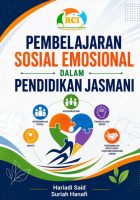
Pembelajaran Sosial Emosional Dalam Pendidikan Jasmani
Synopsis
SPESIFIKASI BUKU
Harga : Rp 65.000
Ukuran : 14,8 cm x 21 cm
Jumlah Halaman : 117 hal
Ketebalan Buku : 1 cm
ISBN : On Proses
Deskripsi Buku : Pendidikan jasmani pada hakikatnya tidak hanya berkaitan dengan pengembangan kemampuan fisik, keterampilan gerak, kebugaran, dan kesehatan peserta didik. Lebih dari itu, pembelajaran pendidikan jasmani merupakan ruang yang sangat kaya untuk mengembangkan berbagai kompetensi sosial dan emosional. Dalam aktivitas permainan, olahraga, latihan kebugaran, maupun kegiatan kelompok, peserta didik berhadapan secara langsung dengan berbagai situasi nyata, seperti bekerja sama, berkomunikasi, mengelola emosi, menghadapi kemenangan dan kekalahan, menyelesaikan konflik, mengambil keputusan, menghargai perbedaan, serta membangun rasa empati terhadap orang lain. Atas dasar pemikiran tersebut, Pembelajaran Sosial Emosional (PSE) menjadi bagian penting dalam penyelenggaraan pendidikan jasmani yang bermakna. PSE tidak seharusnya dipahami sebagai tambahan materi yang harus disampaikan melalui ceramah, melainkan sebagai nilai, proses, dan pengalaman yang terintegrasi secara kontekstual dalam setiap aktivitas pembelajaran. Lapangan olahraga, ruang aktivitas fisik, dan berbagai bentuk permainan dapat menjadi laboratorium nyata bagi peserta didik untuk mengenali dirinya, mengelola emosi, membangun hubungan sosial yang sehat, serta belajar mengambil keputusan secara bertanggung jawab.
REFERENSI :
Åsebø, E. K. S., Løvoll, H. S., & Krumsvik, R. J. (2023). Students’ coping strategies in physical education: A systematic review. Scandinavian Journal of Educational Research. Advance online publication.
Aygun, Y., Yaman, Ç., & Demirhan, G. (2024). Emotional and social outcomes of the teaching personal and social responsibility (TPSR) model in physical education: A systematic review and meta-analysis. Children, 11(4), 432.
Boke, H., Wang, Y., & Li, H. (2025). Effects of cooperative learning on students’ learning outcomes in physical education: A meta-analysis. Frontiers in Psychology, 16, 1452387.
Bores-García, D., Hortigüela-Alcalá, D., Fernandez-Rio, F. J., González-Calvo, G., & Barba-Martín, R. (2020). Peer assessment in physical education: A systematic review of the last five years. Sustainability, 12(21), 9233.
Cañabate, D., Nogué, L., Serra, T., & Colomer, J. (2020). Supportive peer feedback in tertiary education: Analysis of pre-service teachers’ perceptions. Education Sciences, 10(11), 326.
CASEL (Collaborative for Academic, Social, and Emotional Learning). (2020). CASEL’s SEL framework: What are the core competence areas and where are they promoted? https://casel.org/casel-sel-framework/
CASEL. (2020). SEL for adults: Adult SEL framework. https://casel.org/sel-for-adults/
Cipriano, C., Strambler, M. J., Naples, L. H., Ha, C., Kirk, M. A., Wood, M., Sehgal, K., Zieher, A. K., Eveleigh, A., McCarthy, M. F., Funaro, M., Ponnock, A., Chow, J. C., & Durlak, J. A. (2024). The state of evidence for social and emotional learning: A contemporary meta-analysis of universal school-based SEL interventions. Child Development, 95(4), 1181–1204.
Dyson, B. (2021). “Wow! They’re teaching each other”: Cooperative learning as a pedagogical model in physical education. Journal of Teaching in Physical Education, 40(3), 439–447.
Dyson, B., Howley, D., & Shen, Y. (2021). ‘Being a team, working together, and being kind’: Primary students’ perspectives of cooperative learning’s contribution to their social and emotional learning. Physical Education and Sport Pedagogy, 26(2), 137–154.
Jennings, P. A., & Greenberg, M. T. (2009). The prosocial classroom: Teacher social and emotional competence in relation to student and classroom outcomes. Review of Educational Research, 79(1), 491–525.
Karmina, S. (2024). Teachers’ perspectives on implementing cooperative learning in physical education. Jurnal Pendidikan Jasmani dan Olahraga, 9(2), 145–160.
Kemendikdasmen RI. (2024). Profil Pelajar Pancasila: 6 dimensi dan elemen kunci. Pusat Penguatan Karakter, Kementerian Pendidikan Dasar dan Menengah. https://cerdasberkarakter.kemendikdasmen.go.id/
Kohake, K., van der Mars, H., Casey, A., & Trout, J. (2024). Systematic observation approaches for teaching quality in physical education contexts: A review. Research Quarterly for Exercise and Sport, 95(1), 89–104.
Kwon, S. H., Choi, S. M., & Kim, J. H. (2024). Team-building interventions and team cohesion in sports teams: A meta-analysis. Frontiers in Psychology, 15, 1398472.
Liu, B., Chen, Y., & Wang, Z. (2025). Team-building sports games in physical education and students’ resilience: An intervention study. BMC Public Health, 25(1), 287.
Maslach, C., & Leiter, M. P. (2016). Understanding the burnout experience: Recent research and its implications for psychiatry. World Psychiatry, 15(2), 103–111.
Moon, J., Webster, C. A., Stodden, D. F., Brian, A., Mulvey, K. L., Beets, M. W., Rodrigues, L. P., Barnett, L. M., Robinson, L. E., & Martin, R. (2024). Physical activity interventions to increase children’s social and emotional learning: A systematic review and meta-analysis. Journal of Physical Activity and Health, 21(3), 238–253.
OECD. (2024). Social and emotional skills for better lives: Findings from the OECD Survey on Social and Emotional Skills 2023. OECD Publishing. https://doi.org/10.1787/35ca7b7c-en
Permendikbudristek RI No. 12 Tahun 2024 tentang Kurikulum pada Pendidikan Anak Usia Dini, Jenjang Pendidikan Dasar, dan Jenjang Pendidikan Menengah. (2024). Jakarta: Kementerian Pendidikan, Kebudayaan, Riset, dan Teknologi RI.
Permendikdasmen RI No. 13 Tahun 2025 tentang Perubahan atas Permendikbudristek No. 12 Tahun 2024 tentang Kurikulum. (2025). Jakarta: Kementerian Pendidikan Dasar dan Menengah RI.
Remskar, M., Western, M. J., & Ainsworth, B. (2024). Physical activity combined with mindfulness for mental health